
5 Rules You Must Know Before Starting Your Comic
Things Every Comic Artist Wishes They Had Been Told

So you want to start a comic, do you? That’s great. No really, I’m glad to hear it. But there is so much to know, so much to learn, and with the kinds of poor advice I see circling the internet, you’re on track to get burned.
I’m going to say some pointed things. If you really are making comics, some of them might hurt or offend you. Perhaps I could have written them more politely, but I think they need to be written this way so that you can truly grasp the enormity of what you are about to try and do.
I’ve been in the comics industry now for a few years. I started probably where you are now - maybe even less (I learnt to draw at university). In that time, I’ve made more mistakes than I can count, most of them easily avoidable. Listen closely, and you might learn a thing or two.
Rule #1: Your Story Sucks and You Shouldn’t Write It
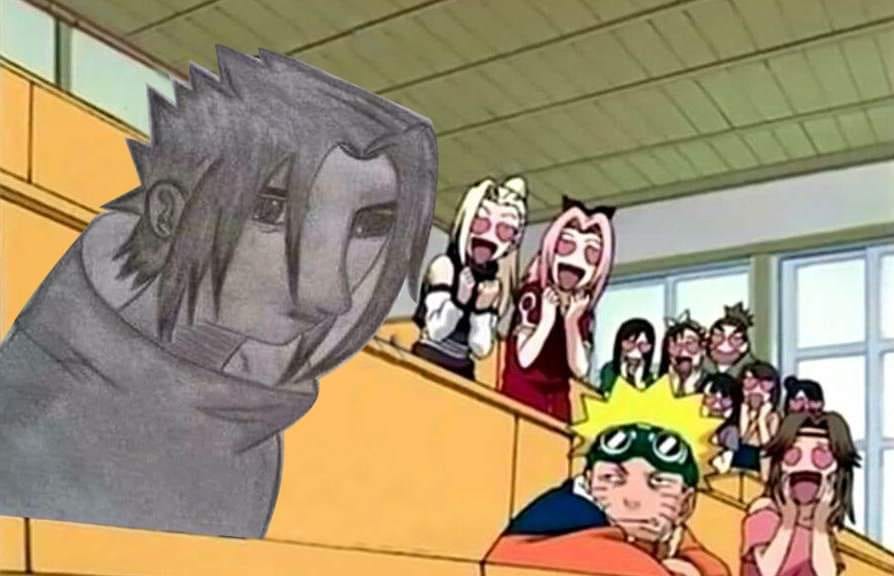
I and every single other comic artist I know has “their precious story,” their vision that haunts them daily, their OCs and their surprise twists they drool at just thinking about showing off to other people. An idea so infectious it has to be given form. This is, after all, the very purpose for which you started making comics - to share your vision.
I’ve been there, we’ve all been there, so I’m not trying to be dismissive. Your story has potential, it really does, but not right now. Don’t ever start with your precious story.
“But what about Handjumper?”
“But what about Naruto?”
I’m telling you, don’t do it. Even where they succeeded (against all odds) - the very fact they started by writing their precious story is what has hindered their work from being even better than it is. Let me explain.
Your precious story has to be done right. It has to be perfect. And your perfect vision is never (and I mean never) going to be the same as a well-written story. There will be changes you have to make, moments you have to cut, characters who will have to suffer that you won’t have the backbone to enact.
This kind of ruthlessness is already hard for a story you don’t care about, much less one you do. To become a better writer, you have to write a story that you can bully around. A story that doesn’t possess you in the depths of your spirit. You need a story you can compromise on.
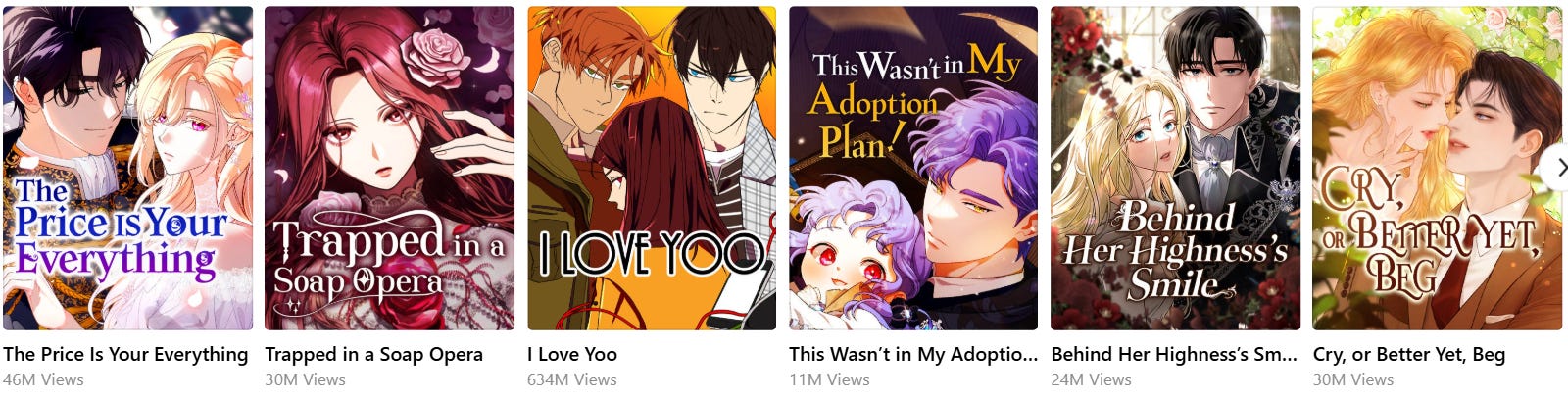
Your precious story is also boring and unoriginal. It is, it’s not your fault, that’s just what it means to start writing. Your first story is always going to be formulaic - and the more you try to make it “original” the more formulaic it’s going to be.
Every single writer is convinced their story is an expression of raw creativity, but you can only write what you know. And what you know is other people’s stories. So don’t try to be original. Write what you know, write what works. Try to figure out how to write for comics.
Your experiences writing a new story will teach you how comics work in a way you could never know before. It will teach you how to use the genre well. Comics are not books, nor are they movies. Comics require different writing techniques, different methods of storytelling.
Your experiences will make your precious story far, far better than it ever would have been when you do eventually go to write it.
Rule #2: Start Small
Any kind of craft you are pursuing is like preparing for a marathon. The marathon runner does not simply go out and run 42 kilometres (that is, 26 freedom units). First, he begins with a short run, then each day he runs for longer. He alternates his routine - one day he runs for two hours, the next he might only run for twenty minutes. He spends that time perfecting his techniques - his pace, his breathing, his posture. He goes to the gym and works out the muscles he is most weak in. He eats a strong and healthy diet.
Starting with your 300+ chapter megaseries is like getting off your couch for the first time and running a marathon. It won’t work. And if you somehow finish it, it’ll be with terrible form and three days behind everyone else.
Start small. Write a 1 chapter short story. Don’t focus on speed, focus on quality. Get every line right. You’re like a baby on a bicycle, you need to get the fundamentals down first before you get your speed. Even if you think you’re good, start with a single chapter. It has a beginning, middle, and end. If you finish it, you will have written an actual ending - something many comic artists have never done in their entire lives. If you finish it well, you will have learnt more about comics in that one chapter than if you’d made 100 rushed-out, poor and shoddy ones.
Then write a 4 chapter story. Then 16. Go back to 4, consolidate those skills. When you’re ready, then you start your longform story.
Rule #3: Work Out Your Artistic Muscles
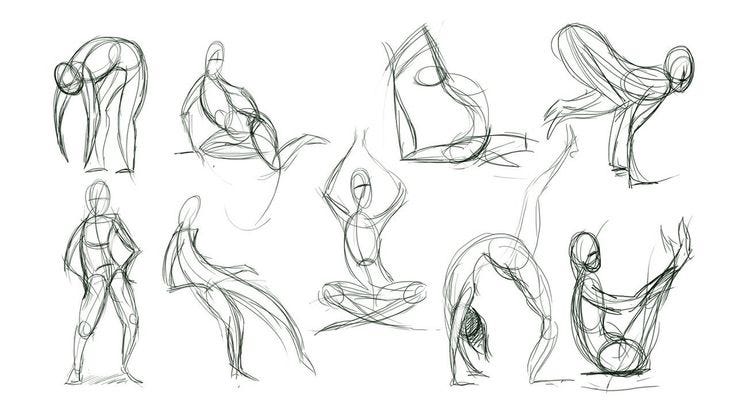
Your body needs to be in peak form to run a marathon, so also your artistic techniques need to be in peak form to finish your longform story. This means practising your anatomy, construction, lineart, gesture work, expressions, and rendering1 . This means you need to find room for it in between your comic making - you need to balance out your time. Make a schedule - if you can.
I know you guys, you’ll all chronically disorganised. This is not the sign of a good artist. A good artist is not sporadic and inspirationally driven, they are disciplined and organised. Your disorganisation does not make you a Jimmy Hendrix or a Salvador Dali. No great artist has ever succeeded with a poor work ethic, these are lies.
Rule #4: Eat Healthy Art
Chances are, this is where you fail the most. A great runner needs a healthy diet for his body to perform at its best, and the same is true for you. Yes, you need to eat, sleep, exercise, but more than that you desperately need to be consuming good stories and art. Artists are drawn to those at their level for encouragement and affirmation. This is good and necessary (you need art communities), but it can trap you in a cycle of mediocre art.
![ART] The architectural work of Kentaro Miura's (Berserk) : r/manga](https://substackcdn.com/image/fetch/$s_!M7BR!,f_auto,q_auto:good,fl_progressive:steep/https%3A%2F%2Fsubstack-post-media.s3.amazonaws.com%2Fpublic%2Fimages%2F3bbe9801-f54a-439f-9cca-8105c15628d4_1920x1391.jpeg "ART] The architectural work of Kentaro Miura's (Berserk) : r/manga")
If you truly want to improve, you need to look beyond what your friends are making, even the comics you personally like. Go look at what is critically acclaimed - the stories that are widely considered to be the best ever - and start reading them. Break down their art, try to recreate some of their panels yourself or use their style in a new context. Think of it as building up your mental library. Each technique, style, and skill you steal from someone else is another added to your repertoire. In time, they will all mix together so well that no one - not even you - will be able to recognise them. They will become original.
You can still have junk food. You can still read mediocre comics. But you have to be aware of what they are and balance your diet accordingly.
Rule #5: Ask Yourself, Really?
Burnout is your greatest enemy. Your second greatest enemy is the need to get a “real” job and earn some money. Your reasons for making comics have to be better than those, you need to be convinced it’s worth it. Otherwise, when troubles come, you’ll give up.
But maybe you should give up
Comics aren’t for everyone, they may not be for you. Think for a moment of the brutal schedule. Day in day out drawing multiple illustrations to a high degree of polish, and if you fail at a single panel you will be mocked online by your fans for a funny horse out of proportion or a silly face with a tiny forehead. If only you were a gallery artist, you’d work a fraction as much (if that). Even an illustrator doesn’t draw as many illustrations as you do. A writer can work nonstop for months, even years, on a single book and get the polish just right. No one will be expecting them to drop a chapter of their novel each week, rain, hail, or shine. And if a book gets popular, it will be read by millions more than your comic ever will. You will always be slightly obscure, adults will more often than not turn up their noses at your work simply because it’s a comic. Do you really want that life? Is it really worth it?
Your precious story could always be more successful as a book. As a movie, it could make hundreds of millions. Here’s the best part - if you write a good light novel, someone might even pay you to make it into a comic.
Why be a comic artist then? Personally, I don’t think it’s worth for most artists, at least not yet. The indie comics sphere kinda sucks right now. It’ll get better as we develop the online infrastructure to self-publish, and western industry steps up to provide alternatives to self-publishing sites like Webtoon, Tapas, or Namicomi.
But there are a few reasons to try.
First, there is so much enormous potential in the comic format. There are great stories waiting to be written, new styles waiting to be explored, new ways of storytelling no one has tried. They say a picture tells a thousand words - imagine how much you could tell with a hundred pictures every chapter.
Second, comics are beloved by children, and they often have a deeply formative effective on the adults who grow out of them. You have a real opportunity to empower children with the imagination, awe and wonder of storytelling.
Third, maybe your precious story needs to be told in comic format. Maybe it just won’t work anywhere else. Action certainly fits comic format far, far better than it does for novels.
Think carefully before you start making comics. And when you do start, do it well, do it seriously. I haven’t really discussed here how to fight burnout, which artists to follow or imitate, which platforms or publishers to go for. These are all things I believe you can discover for yourself.
What I have given you here are a couple of “you don’t know what you don’t know” questions. Questions to guide your own questions in your journey going forwards. This is a good place to start, and for some, a good place to end their comic journey.
Comic making can be a noble profession. You should treat it with respect, as with all things that are beautiful and show the divine glory. I hope I have gone some way to demonstrate that, above and beyond all the drivel which comes today from that industry.
This article is one that I have written out of a sense of urgency to young creators. I see so many diving in and starting a comic halfheartedly, only to suffer burnout and give up - or worse - continue on without any ambition or desire for self improvement.
When I first announced I was cancelling my comic Empty Shell and starting a Light Novel on Substack, someone on reddit gave me advice that I have never forgotten.
“Just lower your standards”
I genuinely feel sickened by how common and pervasive this opinion is throughout the webcomic community. And this is why that community is never taken seriously by manga or graphic novel readers, much less the general public. Today, there is little respect for comics outside of manga.
It doesn’t have to be this way.
But that is up to each and every one of you.
Thank you for reading. Soli Deo Gloria.
leave your rendering practice till last, you’ll thank me later